All-on-X vs Dentures: What Patients Should Know
Dentures and All-on-X full-arch implants are both options for replacing missing teeth, but they are very different. At Country Club Dental, we help patients understand the differences so they can make informed decisions about comfort, stability, function, and long-term care.
Dentures Are Removable. All-on-X Is Implant-Supported.
Traditional dentures rest on the gums and are removed by the patient. They may help restore appearance and some chewing ability, but they can also move, rub, or feel less stable for some patients.
All-on-X treatment uses dental implants to support a full-arch restoration. The goal is to create a more stable option for patients with many missing, failing, or non-restorable teeth. A consultation is required to determine whether this type of treatment is appropriate.
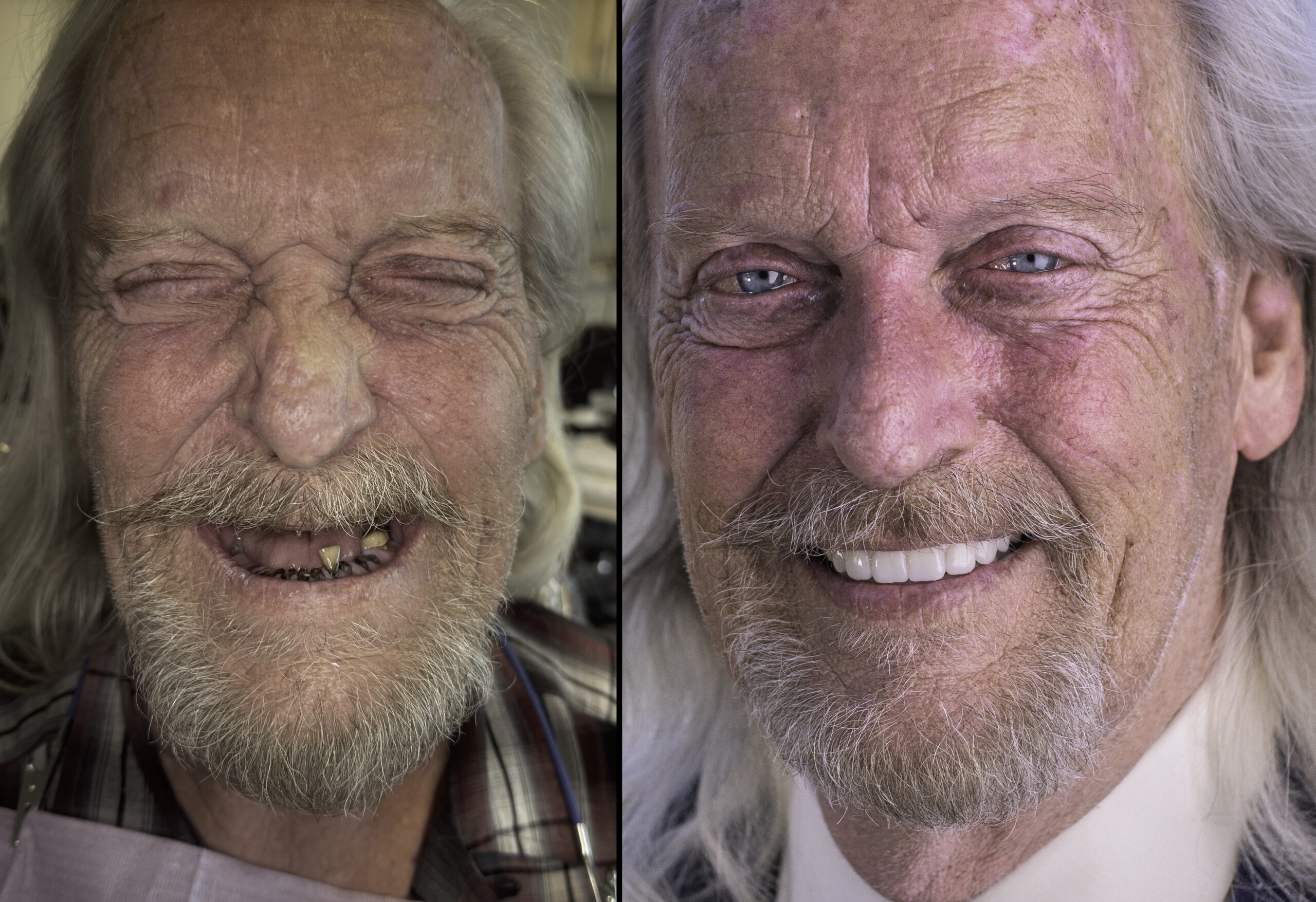
Actual Country Club Dental patient. Individual results vary. A consultation is required to determine treatment options.
Comparing Dentures and All-on-X
Traditional Dentures
Traditional dentures are removable appliances that replace missing teeth and rest on the gums.
They may be a helpful option for some patients, especially when surgery is not desired or not recommended.
Some patients may experience movement, sore spots, difficulty chewing certain foods, or changes over time as the jawbone and gums change shape.
All-on-X Full-Arch Implants
All-on-X treatment uses dental implants to support a full-arch restoration.
The goal is to provide improved stability compared with a removable denture, depending on the patient’s anatomy and treatment plan.
This treatment requires careful planning, surgery, healing, maintenance, and long-term follow-up care.
What Should Patients Consider?
The best option depends on your mouth, health, goals, budget, bone support, and ability to maintain the restoration over time.
Dentures May Involve
- A removable appliance
- Possible use of adhesive
- Adjustments as the gums change
- Limited chewing strength for some patients
- Lower surgical involvement in many cases
All-on-X May Involve
- Dental implants placed in the jawbone
- A fixed or implant-supported full-arch restoration
- 3D imaging and detailed planning
- Healing time and follow-up visits
- Daily cleaning and professional maintenance
Neither Option Is One-Size-Fits-All
Some patients are better candidates for dentures. Others may be candidates for implant-supported options. The right recommendation can only be made after an exam, imaging, and a careful review of health and healing factors.
How We Evaluate Your Options
At Country Club Dental, we do not believe in rushing major treatment decisions. We take time to explain what we see and help patients understand realistic options.
Listen
We discuss your concerns, comfort with dentures, chewing ability, smile goals, and what you want to improve.
Examine
We evaluate the teeth, gums, bite, missing tooth areas, existing dentures, and overall oral health.
Image
3D imaging may be recommended to evaluate bone support, anatomy, and implant planning possibilities.
Plan
We explain whether dentures, implant-supported dentures, All-on-X, or another option may make sense.
Both Options Require Care
Dentures and implant-supported teeth both require maintenance. Dentures may need adjustments, relines, or replacement over time. Implant-supported restorations require daily cleaning, professional maintenance, and monitoring of the implants, gums, bite, and prosthesis.
Good home care and regular dental visits are important no matter which option you choose.
Helpful Questions to Ask
- Am I a candidate for implants?
- Do I have enough bone support?
- Would I need bone grafting?
- How long would treatment take?
- What maintenance would be required?
- What financing options may be available?
Wondering Whether Dentures or All-on-X May Be Right for You?
Schedule a consultation at Country Club Dental in Cameron Park. We will help you understand your options clearly and determine whether full-arch implant treatment may be appropriate.
Individual results vary. A consultation, examination, and imaging are required before treatment recommendations can be made. All-on-X treatment may not be appropriate for every patient.